ADVENTURES IN ADVAITA VEDANTA...

Adventures in Advaita Vedanta, the philosophy and science of spirit. We are one you and I; are you curious why?..


To The Guru

Hari OM

Story-day is for cultural exploration, puraanas and parables and finding out about leading lights in spiritual philosophy.

This week Guru Purnima was celebrated. Purnima refers to full moon and Guru, of course, to the teacher.
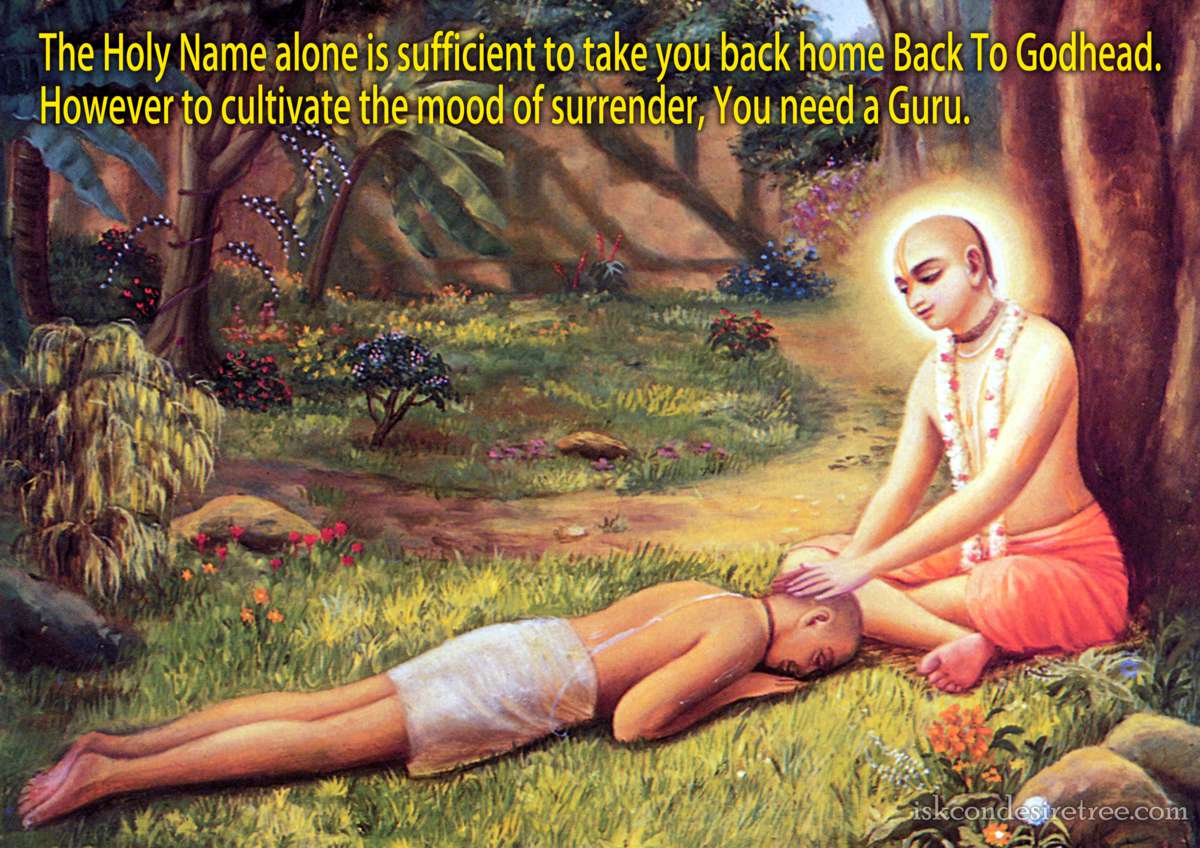
Guru Purnima is the auspicious day when Hindus celebrate, and show their gratitude towards, their Guru. As per the spiritual experts, a Guru is someone who transforms a person with the power of his knowledge and spiritualism. This festival is celebrated all over India and in year 2016 the date for this festival was 19th of July.

This festival is celebrated not just by Hindus, but also by Buddhists and Jainis. In Hindu dharma the Guru Purnima is celebrated to mark the birthday of Guru Veda Vyaasa and it is also a day when Hindus celebrate the teachings of their personal Guru. Guru Vyaasa is said to have written the four Vedas and also the eighteen puraanas. Apart from this he has also written the Mahabharata. For Buddhists it is a bit different. They believe it is the day when Lord Buddha migrated to Saranath from Bodhgaya along with his five disciples. Jainism celebrates this festival as the day when Gautam Swami became the first disciple of Lord Mahavira.

There are various things that are followed on this day by the Hindus. First of all there is the concept of Paduka-puja where the disciples wash the footwear of their gurus as a mark of respect. Then there are various prayers and pujas that are offered with songs and recitations. Many will take up a vrat (fast) for the day and seek to feed their Guru (or the image of that guru if they are not physically in the presence).

In the Hindu shaastra a Guru is required by all once attaining adulthood. A Guru not only gives the disciple education but also clears the dark and evil thoughts that are there in the disciple’s mind and heart. If we look at the word Guru then we will see that it is the combination of two Sanskrit words, namely “Gu” and “Ru”. The former refers to the darkness and the latter refers to the remover of that darkness. So a Guru essentially means someone who can remove the evils and dark thoughts inside a person’s mind. There are Gurus everywhere. Not in the modern sense, where the word has been demeaned somewhat… computer 'guru'… financial 'guru'. In these cases the use of the word guru has taken over from the more legitimate Sanskrit word, 'pundit'. Pundits are lay-teachers. They are experts in shaastra and are able to expound upon them, but have not necessarily followed any particular practice themselves and they will also be householders and will partake in worldly activity other than the subject. A Guru is a sadhu, a renunciate, celibate and focused only on the subject. At the very least a Guru is highly dedicated to spiritual life and the worldly is just something which has to be dealt with in order to further that spiritual life. We may find a Guru in the person we strike up conversation with on a train or a bus, that someone who leaves us thinking with just a few deep and meaningful phrases. We may find a Guru in the wisdom of a child alert to the sensitivities of spirit. We may find a Guru in any society, any faith structure, any part of the world. The word is Sanskrit, the meaning is universal.

Be grateful to those Gurus who have helped your thinking, pointed you in the True direction of spirit, and who have left something of themselves behind, as did Ved Vyaasa and our own Gurudev, in order that we may continue to have our darkness removed.

HH Pujya Gurudev Sw. Chinmayananda
Sandeepany Sadhanalaya, Mumbai
image copyright Yamini MacLean

Fray and Affray

Hari Om

'Freedays' are the 'gather our thoughts' days; Q&As; a general review of the week so far…

As the world turns on its axis, so each country upon the earth turns on its own particular 'spit'; there is a growing sense of unease the world over and it is erupting in pockets of intense destruction, some greater than others. It is often asked, "how can a merciful Lord let this happen?" by those who have some form of faith, or it is said that "there is proof your God does not exist!" by those who do not. Neither statement is fair to the process of faith or spiritual meaning.

If we look for a physical God who can, like a parent, have physical effects we will be disappointed on our reckoning day. If we decry the concept of a Power of Universal Meaning, we deprive ourselves of the fullest extent of living.

What is more, neither statement is helpful in the circumstances to which they are directed. It can certainly be overwhelming to be reading/hearing about such dreadful acts and their consequences. It is very difficult not to fall into the trap of the media and make assumptions and form half-informed opinions from which we in turn will build our actions and words. Anger, hatred, fear and so forth, whilst quite natural as initial reactions, serve no fundamental purpose beyond ensuring further perpetration of evil.

Make no mistake; to think dark thoughts is a perpetration of evil, whether or not those thoughts are voiced or acted upon.

The student of Vedanta learns that it is fine to be disappointed and hurt by the events of the world, but that it is useless to linger in those pains. Rather, we must draw ourselves upwards and seek a balanced view; where we cannot, or where there is clear infringement, we must at least call for and advocate common sense and fairness in dealings… even with the evil-doers.

Furthermore, we must assess how much 'investment' is appropriate in any given situation. "Does this affect me directly? If so, to what degree? If not, do I need to invest any emotional value at this time? If so, for how long? Is there anything which I can do to make a difference to the event? If yes, do it; if not, make decisions about moving along with life. Will there be any purpose served by my remaining emotionally attached to the situation?.." and so it goes on. The world needs those who can operate from compassion without the drag of emotional weight. Let not those who would point and say "you don't have any feelings!" affect you. Attempts to make people feel guilty for not feeling guilty is a very pointless and wasteful use of the human intellect.

We must understand and sympathise with the pain and angst for those who are in the immediacy of the types of events which have peppered the news of late, but unless we have the wherewithal either financially or physically to make a difference in those situations, it is also appropriate, as spiritual adherents and intellectual beings, to continue working for the good and to keep smiling, even now. Let not the crazy world drag you down. Show it you can rise above it and shun its attempts to instil fear and provoke reaction.

Place Love in your hearts, Brahman in your minds and let us pray as One… 
HARI OM, HARI OM, HARI OM...


Without It, Nothing

Hari OM

'Text-days' are for delving into the words and theory of Advaita Vedanta.

We are now studying Aatmabodha. As always, with each week, you are encouraged to review the previous teachings and spend some time in contemplation of the meanings as the affect your life. Please do consider purchasing the text. Remember, also, to recite the mangala charana before each study and review the lessons before each new one.

Looking now at the aspect of Aatman which "I"dentifies…

AaTmn> siCcd<zZc buÏev&RiTtirit Öym!,
s<yaeJy caivveken janamIit àvtRte.25.
aatmanaH sacchidamshashcha buddher-vRttiriti dvayam,
Samyojya chaavivekena jaanaamiiti pravartate ||25||
By the indiscriminate blending of the two - the Existence (and) Consciousness aspects of the Self and the thought wave of the intellect - there arises the notion of "I Know".

We have been learning that the Self, Aatman, is self-effulgent, a light requiring no external power. Equally, we are to understand that the mind is a product of matter and is therefore intrinsically inert. Without the illumination of Consciousness, mind remains inert and powerless. The awareness within us is something greater than the sum of the material parts, regardless of their subtlety. (That said, it seems somewhat contradictory to think of matter and non-matter 'uniting'. At best we can presume that the matter is an imposition upon the non-matter; अध्यारोप /adhyaaropa - superimposition, is one of the great premises of Advaita and will be discussed more and more and deeper and deeper as the student progresses.)

The experience of "I Know" can only take place where a thought comes into the 'spotlight' of Aatman Consciousness. Each thought, one after the other in speedy succession, gets its moment in the spotlight and the concept of identity, a thinking entity, arises. The antaH karana is ever on the stage ready for exposure to the spotlight. When the external makes its presence felt through the various sense organs, the mind produces responses (according to learned experience). Remember, just as mind can be defined as a constant flow of thoughts, life can be defined as a constant flow of experiences. The storage medium for these experiences is the brain. To 'know' what is happening now, and comparing them to the stored experiences in order to respond accordingly, is the description of the purpose of intellectual life.

The Aatman is Absolute Knowledge, the very core of Knowledge itself, beyond which nothing else need be known. Being Knowledge means that the Self has nothing, as such, to know. Why then do we, at our level, say that 'we know'?

As described, the theory is that knowledge of things and experiences can only be gained as a result of the light shed from the Higher Consciousness which bounces against each thought. An established illustration of this is that of the bucket of water sitting in a dark room. At a certain point, the sun shines through the window and hits the surface of the water, which reflects a wider light into the room and may even make a clear spread of light upon the opposite wall. If we play with the water, the surface breaks up and the light becomes dimmer or disappears altogether. The more agitated the water surface, the less reflective it becomes.

When the Self, ever-present and ever-shining, hits our antaH karana it reflects as an awareness. Due to the presence of thoughts within the individual's matter equipments, the "I" which knows gets claimed as our own, in the form of ahankaara - the ego. The more disturbed the mind (reflecting surface) the less we are able to see the Self which is our true nature and more ego-centric we are. Likewise, with agitated minds vexed with the worries of life, even the most intelligent of men find it difficult to think in a clear and focused manner… the inner light is dimmed.

In this ego-centric state, we attribute anger, knowledge and all such characteristics to the Aatman, because we are ignorant of the pollution which has occurred at the material level.  In reality, the Aatman is nothing but the very Existence-Consciousness-Bliss which underpins all these things but is untouched by them and in no way becomes altered by them. The conditions we put together and call as 'life' exist as an imposition upon the Self.


Stay True

Hari OM
Application - that is what 'Workings-days' are about!
The Narada Bhakti Sutra is our guide for a while… the nature of Love (with the capital 'ell') and a full exploration of it. As always, you are encouraged to seek out the full text from Chinmaya Publications (links in side-bar); but for those who prefer e-readers, this version is recommended. Whilst awareness and interest can be raised by these posts on AV-blog, they cannot substitute for a thorough reading and contemplation...and practice!
 
We read last week how easy it is to fall down 'the stair' of behaviour and habits. This is such a risk to the spiritual traveller that the third and last shloka of this section reiterates;

tr'aiyta ApIme s'gaTsamuÔayiNt.45.
Tarangaayitaa apiime sangaat-saamudraayanti ||45||
Though appearing as a ripple (in the beginning),these (anger, lust etc) by evil-companionship can become an ocean.

Image result for floodThere are many analogies which could be used. The little drip from the tap which fills a bucket overnight; the little spit of rain which becomes a deluge… the little taste of wine which becomes an addiction… this is the warning here.

It is very easy to brush aside concerns, because each little thing is just that; apparently little. Subtle are the invidious ways of negative character traits and behaviours. Put simply, such traits are also the easiest to perform. Performance of positive traits can require effort. The basic nature of mankind is to protect and that sometimes mean attack. Therefore we tend to fall to the lowest common denominator, forgetting to self-monitor and put in the effort to rise above ourselves.

All too easily, we can look back and find that we have tumbled from higher ideals and become immersed in our urges, some which may appear harmless enough on the surface, but which cause us to always stray from our mark. Our society currently pushes constantly through marketing and peer pressures to seek always the preyas, the path of comfort and ease and lustful behaviours, the path of squandering what we gain, of damaging our physical well-being as much as our emotional and spiritual selves. This can all happen even in 'good' company; how much more so if we fall in with the 'wrong crowd'? Gurudev said, "if you re offered a glass of milk to drink and know that there is poison contained in it, will you knowingly drink it? No, of course not! However, milk looks innocent, and the person who is offering it is smiling, so we drink anyway. We pay the price of not checking the situation properly." Spirituality takes effort. It requires that we are constantly alert to our own instincts and behaviour patterns. To say that 'I was good before but I fell in with wrong company' is actually a weak explanation, for the self-responsible sadhaka knows full well that others cannot in fact be blamed for our own behaviour. We alone are responsible for our thoughts, words and deeds. To ensure that we maintain a high standard, clearly the advice is to avoid as much as is possible being in places and situations which may present an opportunity for our fall. To strengthen our positive traits, actively seeking out equally positive places and situations is to be desired.

The athlete wishing to be top of their sport does not frequent night clubs or fast food restaurants; they will be found on the arena of their choice practicing the very thing they wish to be best at and that too, in the company of others of like desire.

The spiritual student, wishing to maximise that spiritual experience does not sit and daydream or seek 'out-of'body' experience by extreme methods; rather they will seek out the experienced teachers and fellow spiritual travellers with whom they can discuss their doubts and difficulties and find support and companionship as they seek to scale the spiritual heights.

What is involved in this then? This is explored in the following section.


Who Fails?

Hari Om

Each 'Choose-day' we will investigate the process by which we can reassess our activity and interaction with the world of plurality and become more congruent within our personality.

The next little prasaada-pushtaka (gift-book) we are studying is Sw. Tejoymayananda's "Take Charge of Your Life". Guru-ji is a wonderfully pragmatic personality and has a strongly down-to-earth approach to life and application of Vedanta. These are going to be short, sharp bursts
of applied 'shreyas-preyas' decision making!

LIVE BY YOUR CONVICTIONS.
The next important lesson is that we cannot live by another's knowledge. We see high ideals and strong values in others, so we do what we can to emulate those things. Without having inculcated the ideals and values and made them our own, we will often fail and be proven only to have paid 'lip service' to them. Simply by repeating scriptural doctrine does not mean we have a true knowledge or understanding of them; it just means we can read and memorise! At these early stages of Vedantic study, we hear and/or read that "the seer of the pot is different from the pot, the seer of the body is different from the body, therefore "I", the seer, am not the body" - a simple logic, but do we really understand the full implication of the statement? Students will go around voicing the facts as stated but they have yet to make the understanding, the actual knowledge, their own. This takes time and experience.

It is often heard that 'we know, but we cannot live by it'. Having the information is not being transformed into experiential knowledge. This is in part due to the spirit being embodied in animal form. The material part of us, the BMI, will follow its nature. If we are born with a nature which is lazy, uninterested, restless, greedy and so on, combatting those things takes an effort which we may not be able to fund. Even simple habits such as coffee drinking or smoking prove to be very difficult to overcome. The body craves and the mind succumbs.

This does not mean that knowledge is useless or that it cannot change our nature. Knowledge does change us, provided that we make it our own.

Our samskaaras and vaasanas are so deep that they do not change quickly or easily. We do feel guilt deep inside, so to cope, we camouflage it. Carnivores do not say they are eating goat or beef or chicken - they simply call it 'meat'; then in restaurants now it is called as 'non-veg' - sounds so much better eh?! Someone once said 'there is no corruption, only cooperation' - money is given, return is expected; in America they call it political contribution. You can call it what you like and it may even be legal, but minute one accepts a 'contribution' one becomes obliged by it. The words may change, but the facts remain. All sorts of laws may be created, investigations made, but there is an inherent defect… the people manning the posts are but human and subject to their own weaknesses. The problem is man himself.

Until the individual takes full responsibility, there will always be loopholes in any system. Each individual must fund a set of higher values and choose firmly to live by those convictions.


What Is It?

Hari Om

Monday is AUM-day; in search of meditation.

The text being referenced for the next few weeks is "The Art Of Contemplation". Last week we saw the first part of an introduction to the concept and purpose of contemplation. This week we complete that intro.

CONTEMPLATION (summary part two)
In all faiths, the teachers have developed techniques by which the average devotee, not necessarily willing or capable of grasping the subtleties of technique and philosophy alone, might marshal themselves into a relative state of quietude. The steeples of the churches, the high chambers of temples, the domes of mosques… all are designed to draw the eyes and the minds to the Higher. Their very height and majesty bring a natural stillness to the devotee and prepare them in a physical atmosphere for attending to their own inner 'atmospheres'. Other things add to the ambiance of contemplation in such places; ringing of bells, burning of incense, chanting and so forth. Sadly, too many of us tend to bring the outside troubles into these houses of contemplation and miss the wondrous experience on offer to us. We use the space of silence to work over our mental agitations and build up our resentments and imaginations about the external, rather than focusing on the internal and the Higher.

Image result for meditationWhat is the contemplative student aiming for? What is to be sought?

Nothing short of the mysterious power called Life! Not some external power in 'heaven', not a physical being sitting on an enormous throne, not an 'eden'… nothing but to experience the truth of Existence is the goal of the true-hearted devotee, no matter from which society or faith structure they come. In contemplation we attempt to move towards the Life-giving Principle of Consciousness, without which we would be nothing more than the rocks in the mountains. We cannot make this attempt in our daily agitated states. Therefore the first step in contemplation is the 'quietening of the mind'.

In the seat of meditation we are searching. In our own study and discussion, we are seeking. Remember, the latter is the case of not knowing what is being sought. The former is, you may say, seeking with Knowledge; we have an understanding of what it is that is being sought and set out in a particular direction in order to locate it. Our study of scriptures and philosophy leads us to believe that there is indeed a Life-giving Principle from which we arise; irrespective of whether we are Christian, Hindu, Muslim, Jewish… the highest knowledge base in each recognises the One Consciousness behind everything, (it is only the petty humans without this knowledge, stuck in their ego-selves, who argy-bargy about 'my religion, your religion').

Here we are then, looking into the search of the Higher by contemplating what we have learned and applying that in the seat of meditation.

Important note; Meditation is a noun, not a verb. It is a specific condition or state of the human mind. In order to bring the mind into the state of meditation, the efforts and exercises used constitute contemplation, which is the verbal context.

Just as 'trying to sleep' is not sleep itself, so contemplation is not itself meditation. Trying to sleep will result, eventually, in the sleep we sought. Contemplation will, with sufficient dedication, will result in the state of meditation. Holding ourselves in that state of Higher Awareness is knowns as Self-Realisation, or Revelation of God.

This can seem to be a daunting prospect. For many of us it can seem an impossible state to reach. Currently all our instinct is to look to the external. How are we to believe that there can be such a state as 'bliss'. The teachers of the ages offer the example of deep sleep. We only know it has been bliss, however, when we return to our full waking state and can recall that, for a time, we were free of the external and its disturbance. A full and deep sleep refreshes us, recharges our 'battery'. We are then told that to sit in full meditation, this bliss of non-externalness is present, but in a state of consciousness whereby we at one and the same time 'know' we are in bliss, which we certainly cannot do in deep sleep.

Thus, in a nutshell; The art of contemplation is to hold the body from restlessness, to hold the mind steady and focused and to move into the state of meditation wherein we come to know Self. 

Image result for meditation

Rain or Fair?

Hari OM

Sounds-day is for listening/viewing a variety of devotional items from and for all ages and traditions.

It was St Swithin's day... did it rain with you, or was it a fair day? Whichever, we must make the most of things. Keeping calm and carrying on. Music such as this can help...


Image result for aum